



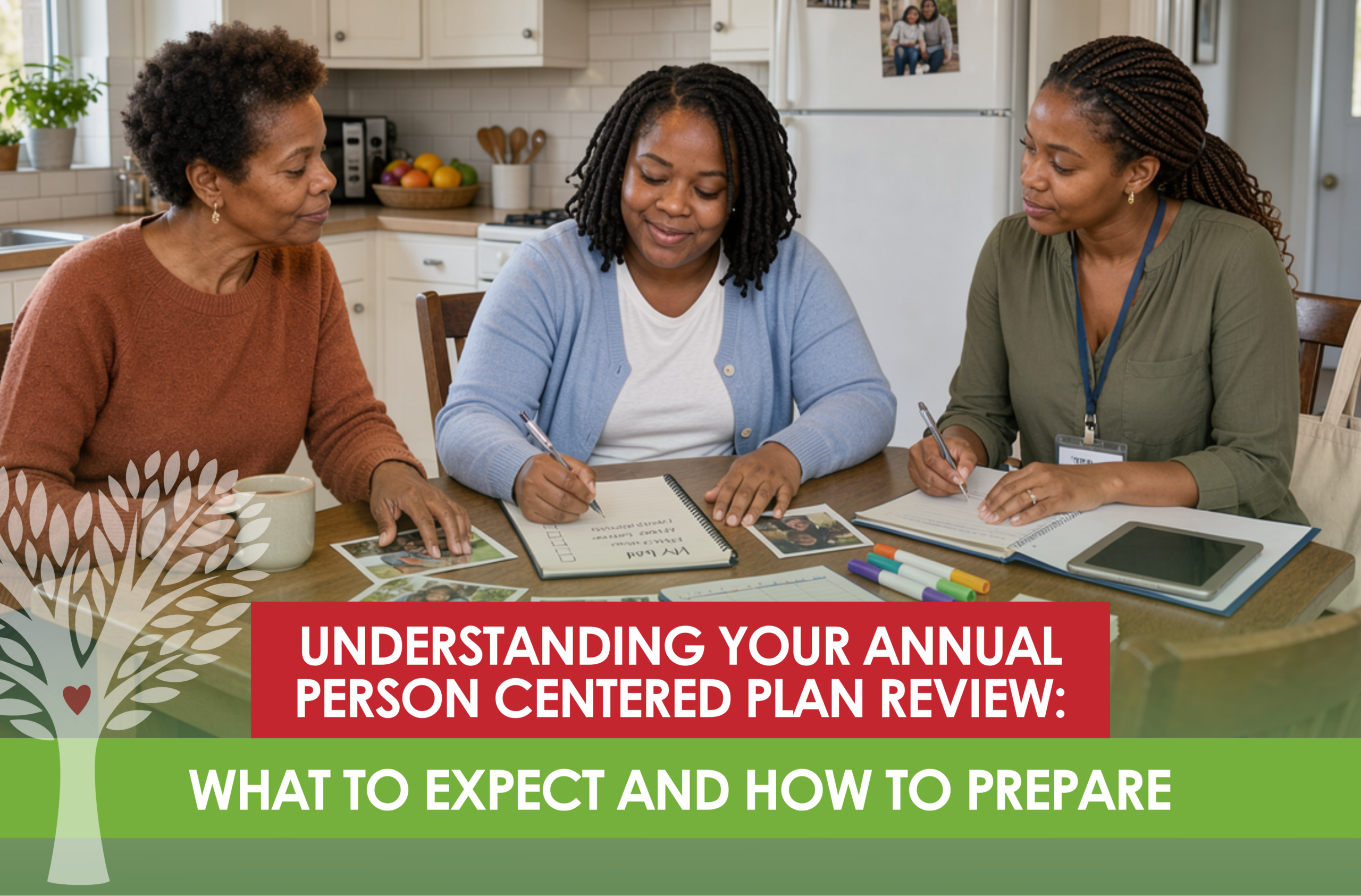
Once a year, the people who care most about a participant sit down together to talk about the year that was and the year ahead. They talk about what’s gone well, what’s changed, and what the participant hopes for next.
That’s the annual person-centered plan review. It’s one of the most meaningful conversations in a participant’s year.
Families often tell us they walk into their first few reviews unsure of what to expect. That’s completely understandable. The meeting comes with paperwork, a case manager, a planning team, and a lot of ground to cover. With a little preparation, it becomes much more than a meeting. It becomes a celebration of growth and a chance to dream a little bigger.
This guide walks you through what the review covers, who’s there, what to bring, and how to make sure the participant’s voice leads the way.
A Quick Refresher: What Person-Centered Planning Means
If you read our earlier article on person-centered planning, you know the heart of it: the plan is built around the person, not the program. Their goals, interests, strengths, and preferences shape the support they receive.
The annual review keeps the plan current. People grow and change, and so do their goals. A plan that fit perfectly last year may need new chapters this year.
What the Annual Review Covers
In Maine, each participant’s plan is reviewed and updated at least once a year. The conversation usually includes:
Reflecting on the past year. What goals did the participant work toward? What progress are they proud of? Maybe they learned to manage a grocery budget, started a new volunteer role, or made a close friend. These milestones deserve to be named and celebrated.
Checking in on what’s working. Which activities, routines, and supports does the participant enjoy and want to keep?
Talking about what’s changed. New interests, new health needs, a new living situation, or a shift in family circumstances can all shape the plan going forward.
Setting goals for the year ahead. This is where the participant’s hopes take center stage. Goals can be big or small, practical or personal, from learning to use a bus schedule to trying a new Special Olympics sport.
Confirming services and supports. The team makes sure the plan reflects the support the participant needs to reach those goals.
Who Attends
The participant’s case manager organizes and facilitates the meeting. The participant is at the center, and whenever possible, they lead the conversation themselves.
Others at the table often include:
- Parents, guardians, or other family members
- The participant’s support providers, including their Families Matter Inc team
- Other professionals involved in the participant’s care
- Anyone else the participant would like to invite, such as a trusted friend or mentor
The meeting can be scheduled at a time and place that works for the participant. If there’s someone whose presence would help them feel comfortable and confident, it’s worth asking to include them.
What to Bring
A little gathering ahead of time makes the conversation smoother:
- A copy of last year’s plan, so you can look back at the goals you set together
- Notes on progress and highlights, including stories, photos, or anything the participant is proud of
- Updates on health, medications, or routines that have changed during the year
- Questions you’ve been saving, written down so nothing gets forgotten in the moment
- The participant’s own ideas, in whatever form feels natural to them
Preparing Together: Putting the Participant’s Voice First
The most powerful preparation happens in the weeks before the meeting, in everyday conversations with the participant. A few gentle questions can help them think about what they want to share:
- What was your favorite thing you did this year?
- What are you proud of?
- What would you like to learn or try next?
- Is there anything you’d like to do more of, or less of?
- Who are the people you enjoy spending time with?
- What does a really good day look like for you?
Some participants like to write down their answers. Others prefer to draw, make a list with a family member, or put together a few photos to share at the meeting. There’s no wrong way to do it. What matters is that their words, preferences, and dreams come into the room with them.
If the participant would like to lead part of the meeting, encourage it. Even introducing themselves, sharing one goal, or telling the team about a favorite moment from the year can be a meaningful step toward self-advocacy.
Questions for Families to Consider
Families bring their own valuable perspective. Before the meeting, it can help to reflect on:
- Where have you seen your loved one grow this year?
- Are there new interests or strengths that should be reflected in their goals?
- Have any changes at home or in health affected their daily routine?
- What would you like the team to know that may not show up in paperwork?
- Is there anything you’d like to understand better about their services?
During the Meeting
A few simple practices help keep the conversation person-centered:
Let the participant speak first when possible. Give them time to answer in their own way, even if it takes a moment.
Celebrate before you plan. Starting with accomplishments sets a warm, encouraging tone for everything that follows.
Ask for clarity. If a term or process is unfamiliar, ask. Your case manager and support team want you to feel confident about the plan.
Remember the plan can grow. The annual review isn’t the only chance to make changes. If needs or goals shift during the year, you can ask your case manager about updating the plan.
A Partnership, Year After Year
A strong annual review is a partnership. The participant brings their hopes. The family brings love, history, and insight. The support team brings experience and a commitment to helping those hopes take shape in everyday life.
At Families Matter Inc, we treasure being part of these conversations. Many of our staff have walked alongside participants for 10, 15, even 20 years, which means we get to see goals set in one review become accomplishments celebrated in the next. That’s one of the greatest joys of the work we do.
If you have questions about preparing for an upcoming review, or about how person-centered planning works at Families Matter Inc, our Assistant Directors are always happy to talk.
- Hallowell: Jane Lerette – 207-621-1023
- Gardiner: Erica Poulin – 207-203-0004
- Skowhegan: Melinda King – 207-621-2992
- Waterville: Debra Wells – 207-616-3284